

Introduction:
"As the sanitaryware industry marches into the 'Industry 4.0' era, products are no longer merely vessels for waste disposal; they have evolved into intelligent terminals that integrate material science, electronic engineering, and fluid dynamics. As a pioneer in high-end bathroom technology, Sunlets is dedicated to transforming cutting-edge craftsmanship into tangible value for our users."
Case 1: Micro-Nano Engineering — Antimicrobial & Easy-Clean Surfaces
In the post-pandemic era, demand has shifted from simple "clean-looking" glazes to verifiable, long-lasting biological protection.
The Upgrade: Moving beyond temporary organic coatings, Sunlets highlights the integration of Ag-Zn Co-doping technology. During the high-temperature firing at 1280°C, antimicrobial ions are fused directly into the ceramic crystal lattice. Performance Leap: Lab data indicates a 99.9% instantaneous kill rate. Crucially, abrasion resistance improved by 50%, with antimicrobial activity remaining above 95% even after a simulated 10-year wear cycle. Original Insight: This "structural antimicrobial" approach eliminates the industry struggle with peeling coatings, making it the premier solution for healthcare and premium elder-care environments. | 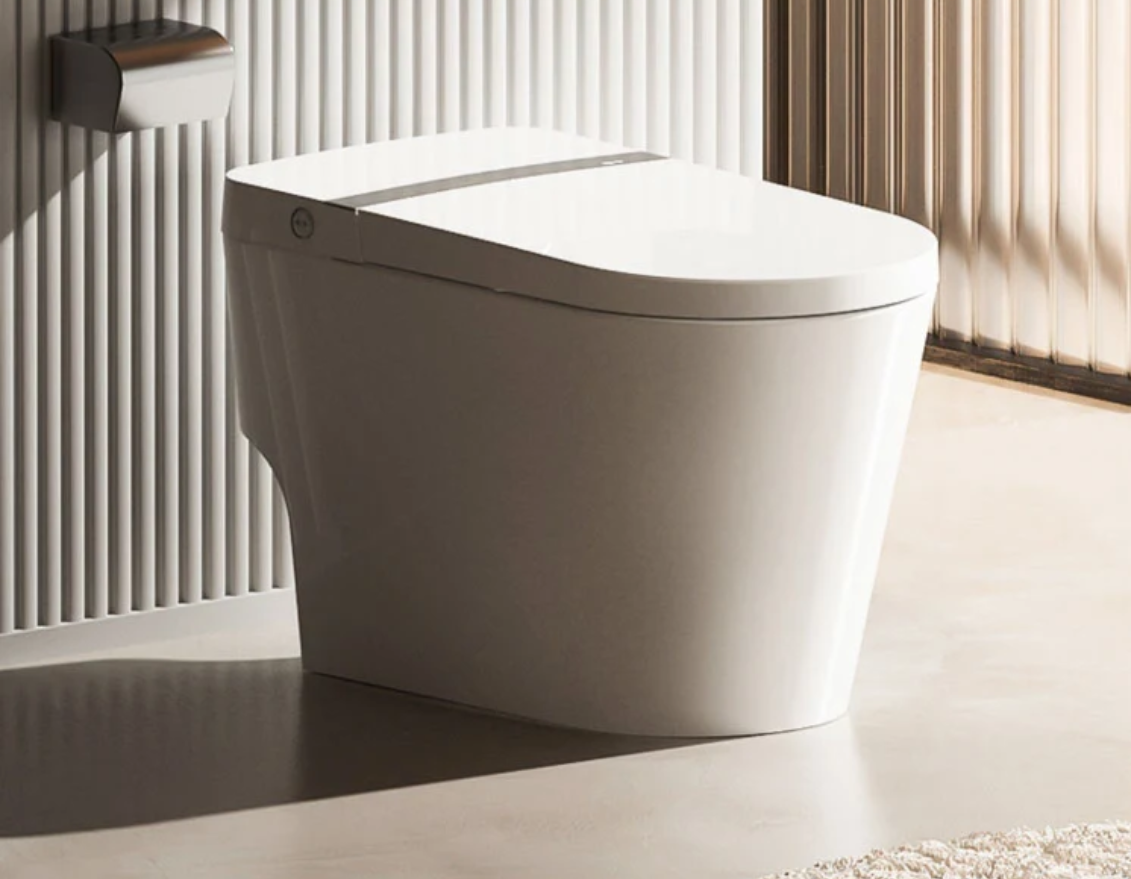 |
Case 2: Redefining Fluid Dynamics — The Rimless Vortex System
The traditional rim of a toilet bowl is a primary breeding ground for bacteria. Functional upgrades focus on leveraging centrifugal force to reinvent the flushing logic.
Analysis: Utilizing Computational Fluid Dynamics (CFD) simulations, we redesigned the water inlet angle for horizontal jetting. Instead of gravity-fed vertical flow, the water creates a powerful horizontal vortex covering the entire interior surface.
Efficiency Data: According to the , advanced flushing geometries can reduce single-flush volume to below 3.0L. Sunlets' case results show a 30% water saving while increasing rinsing efficiency by 20%.
Case 3: Electro-Ceramic Integration — Smart Sensing & Thermal Management
Smart toilet evolution is no longer about adding modules; it’s about the thermal equilibrium between the ceramic body and electronic components. The Upgrade: Utilizing Hexagonal Boron Nitride (h-BN) as a high-conductivity filler for heated ceramic seats. Technical Logic: Traditional ceramics have low thermal conductivity, often leading to "hot spots." By infusing functional ceramic fillers, the seat achieves rapid, uniform heating in seconds, while reducing standby power consumption by 15%. Market Insight: This leap from "physical shaping" to "functional integration" aligns with the technological pivots forecasted in the . | 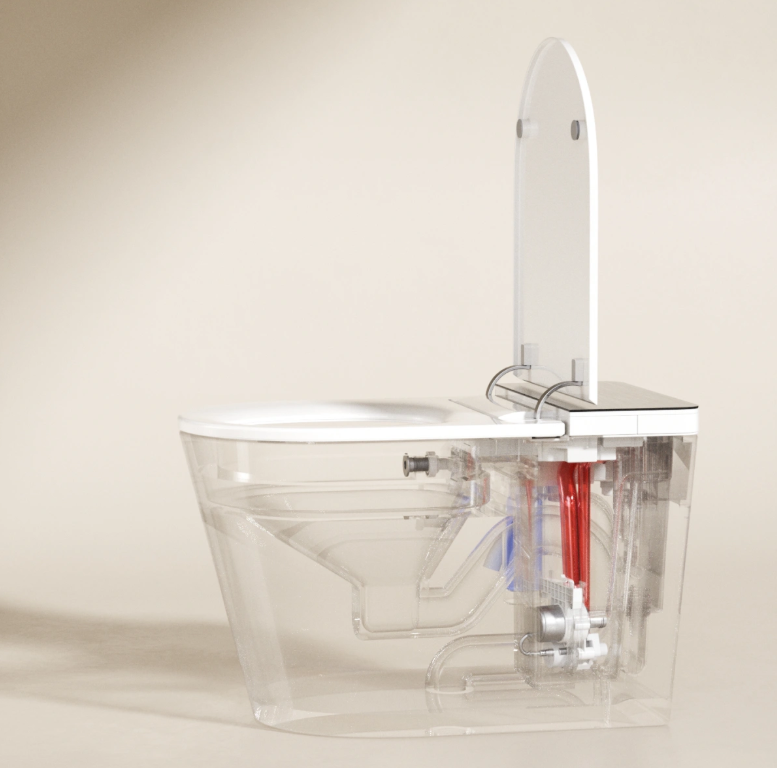 |