

When qualifying sanitaryware projects, investment size is often used as a proxy for the size of the sales opportunity: a new plant worth tens of millions of euros looks more worth pursuing than a retrofit worth a few hundred thousand dollars. In our roughly one-year monitoring sample, the two did not rank that way. For the large plant, there is still no public evidence of room for an independent supplier to enter. For the small retrofit, an independent supplier's entry is confirmed by an official record.
This article draws on a project-monitoring exercise covering sanitaryware manufacturing investments (about one year, across Africa, Central Asia and South Asia, ending with around ten verified projects). It tests whether "size equals opportunity" holds in this sample, and explains why equipment demand scale and supplier accessibility should be assessed as two independent variables.
Equipment demand scale answers this question: how much equipment does the project itself need? It is determined by project type — a new turnkey plant, a single-line expansion, or a partial technical upgrade. Supplier accessibility answers a completely different question: how much realistic room does an independent equipment supplier have to get in? It requires another kind of evidence — public tenders, a diversified supplier structure, historical procurement records, or a confirmed turnkey delivery of the whole plant. |  |
The two rest on different evidence. Equipment demand scale is judged mainly from project size, capacity and scope of construction; supplier accessibility requires further observation of procurement and supplier-relationship evidence.
First, the overall picture. Among projects rated HIGH on equipment demand scale, not one was observed with a confirmed HIGH or MEDIUM supplier accessibility. Across the whole sample, no project was rated HIGH on accessibility, only one was rated MEDIUM, and the large majority of the rest were LOW or UNKNOWN. This is only the classification result for this sample, not a statistical conclusion, but it suggests the two variables do not automatically move together.
A new sanitaryware plant in Central Asia is one of the largest projects in the sample in terms of equipment demand scale: an investment in the tens of millions of euros, a plant-level new build, planned annual output in the hundreds of thousands of pieces, with room left to expand. But public information gives no hint of who the equipment suppliers are, so supplier accessibility is UNKNOWN.
A large South Asian bathware group is similar: several new plants under construction at the same time, a total investment on the order of a hundred million dollars, and no public evidence of equipment procurement. Accessibility is likewise UNKNOWN.
UNKNOWN has to be read literally. It is neither "the opportunity is open and the supplier is not yet chosen" nor "already locked up"; it is an honest record that the evidence is missing. For an equipment supplier, the first correct conclusion on this kind of project is not "an opportunity has arrived" but "room to enter is unknown, keep accumulating facts."
In contrast are three cases where both equipment activity and the supplier relationship can be confirmed. A North African ceramics group: recently, its equipment supplier issued a press release confirming the supply of a complete robotic glazing line, and before that the group's high-pressure casting machines had already gone into operation.
A bathware maker in South Asia: a press release from the same international equipment group describes it as a long-term partner across all key technologies, with supply over several consecutive years and multiple sections — from forming and drying to a new kiln and robotic glazing units. Another plant in Central Asia: the whole plant was designed and built by an international equipment group on a turnkey basis, with annual output in the hundreds of thousands of pieces. | 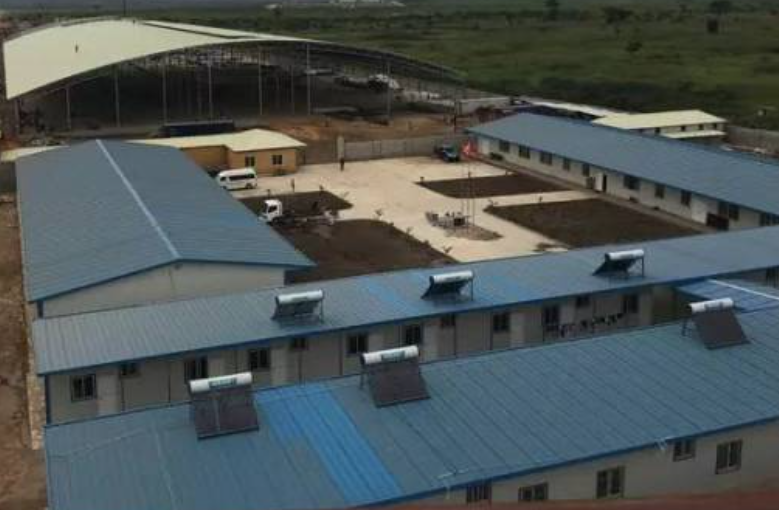 |
In these confirmable cases, publicly visible equipment activity and an existing core-supplier relationship are present at the same time. This suggests a possibility: by the time public equipment procurement information appears, the core-supplier relationship may already be in place. It is only an analytical hint from a limited set of cases, not a rule of industry procurement — it neither implies that "every active project locks in its supplier in advance," nor that "by the time you see the announcement it is too late."
The only case rated MEDIUM on supplier accessibility comes from a very small project: an energy-saving upgrade at a plant in Central Asia, with a total investment in the low hundreds of thousands of dollars, recorded on the official page of a multilateral development bank's green financing programme. The actual supplier was a regional small-to-mid-size equipment company, and the package covered ball milling, high-pressure casting, automatic glazing, energy-saving drying and automatic quality inspection.
The value of this case is not to prove that "small projects are easier to get into" — a single case cannot support that conclusion — but to provide one case of independent-supplier entry confirmed by public evidence. It shows that supplier accessibility cannot be inferred from project size alone: a retrofit worth a few hundred thousand dollars shows independent-supplier entry verified by an official record, while for a plant-level project worth tens of millions of euros the room to enter is currently entirely unknown.
A more prudent framework for qualifying projects is to record two fields at the same time: how much equipment the project needs (demand scale), and how much evidence we hold about room to enter (supplier accessibility, including UNKNOWN). Ranking by investment size alone may send resources first to projects that are large but whose room to enter is still unknown. Once the two variables are separated, mid-size retrofits and peripheral equipment packages deserve to be assessed apart from large turnkey plants, and in projects where the core-supplier relationship is already clear, the non-core sections may be worth watching on their own.
The boundaries of this judgment must be stated honestly. The conclusions rest only on around ten screened and verified projects, with geographic coverage limited to Africa, Central Asia and South Asia; whether Southeast Asia, the Middle East and Latin America, which were not monitored, show the same structure is not known. The data runs up to the latest monitoring round. The accessibility of the two large projects remains UNKNOWN to date, the retrofit is only a single comparison case, and public material (supplier press releases, official project pages) cannot fully reflect the real supplier relationship — the relationship may be earlier than, and deeper than, any public record.
Within these boundaries, the methodology comes down to one line: project size is a demand signal, not a signal of room to enter; keeping UNKNOWN as UNKNOWN is itself part of professional judgment.