

Short mould life and dimensional deviation cannot be blamed on mould material alone. Product data, the master model, the working mould, slip, forming recipes, demoulding and firing shrinkage create one dimensional chain. An industrial master mould provides a controlled geometric reference, while a porous polymer pressure mould improves cycle repeatability. Final accuracy still depends on revision control, measurement and maintenance.
The master transfers its profile, parting lines, drainage features and shrinkage allowances into later working moulds. Unrecorded master repairs, inconsistent measurement datums or cavities made from different revisions create differences before production begins. Slip rheology, mould drainage, pressure recipes and moisture at demoulding also affect wall thickness and shrinkage. A fired deviation therefore does not prove that the cavity geometry is wrong. The factory needs connected measurements of the master, working mould, green body, dried body and fired product. | 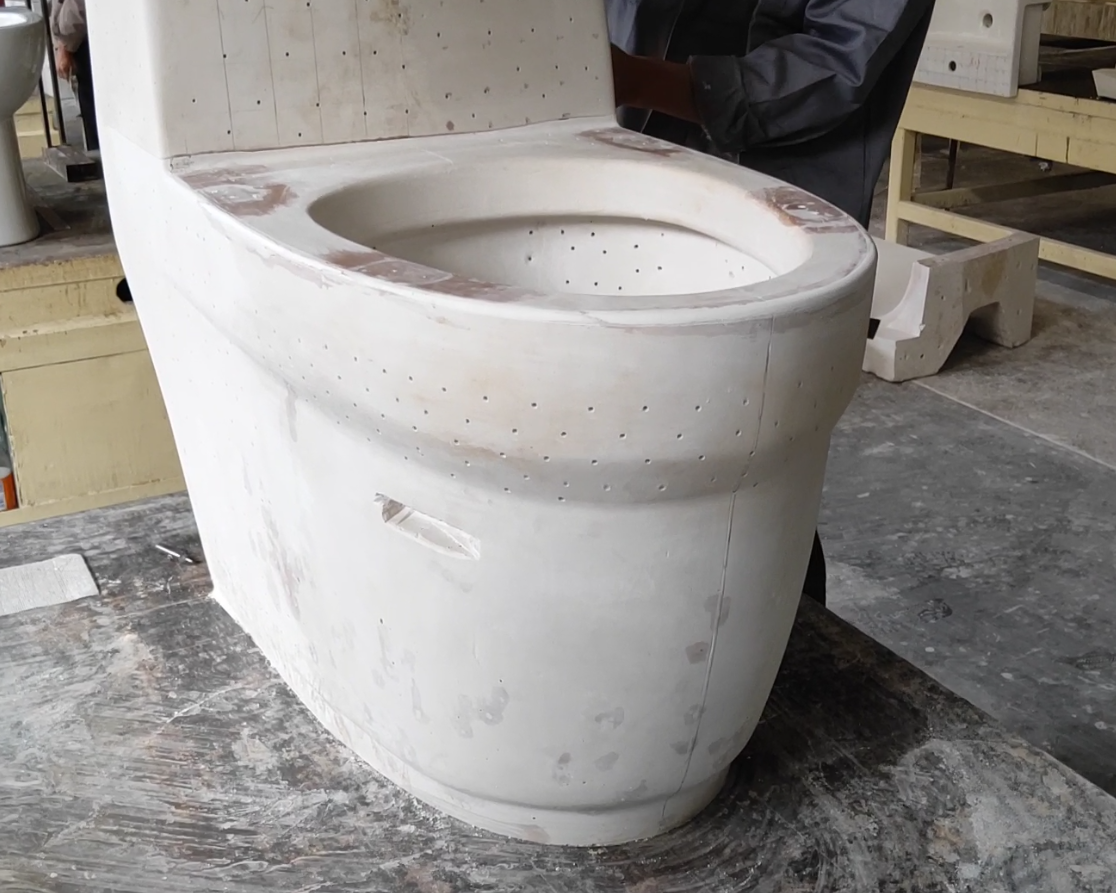 |
The measurement method matters as much as the nominal dimension. Parts should be conditioned and supported consistently, while gauges, fixtures and measurement positions are identified clearly. Otherwise, inspection variation can be mistaken for mould variation.
A master cannot be released merely because its shape appears correct. Datums, critical dimensions, symmetry, parting surfaces and interfaces need defined acceptance criteria, inspection records and revision status. Any repair should trigger remeasurement of related features so that a local correction does not disturb assembly or shrinkage compensation.
Control stage | Record | Result linked to it |
Master | Revision, datums, critical dimensions and surface condition | Geometric consistency of working moulds |
Pressure mould | ID, cycles, drainage and sealing condition | Body formation, wall thickness and demoulding |
Forming | Slip batch, recipe revision and actual curve | Body weight, moisture and dimensions |
Product | Critical dimensions in green, dried and fired states | Shrinkage and deviation source |
This chain separates a design or master error from wear, process variation and firing shrinkage. It also prevents repeated adjustments to product data when the real problem belongs to one mould or process batch.
Pressure casting drives liquid through a porous mould under controlled pressure, allowing filling, pressurizing, drainage and release to follow a repeatable recipe. Compared with plaster moulds that are sensitive to preparation and moisture condition, polymer pressure moulds are better suited to repeated cycles and process-data management. They are not permanent tools. TNO research on porous polymer moulds for sanitary ware links lifetime with cyclic loading and mould stress. | 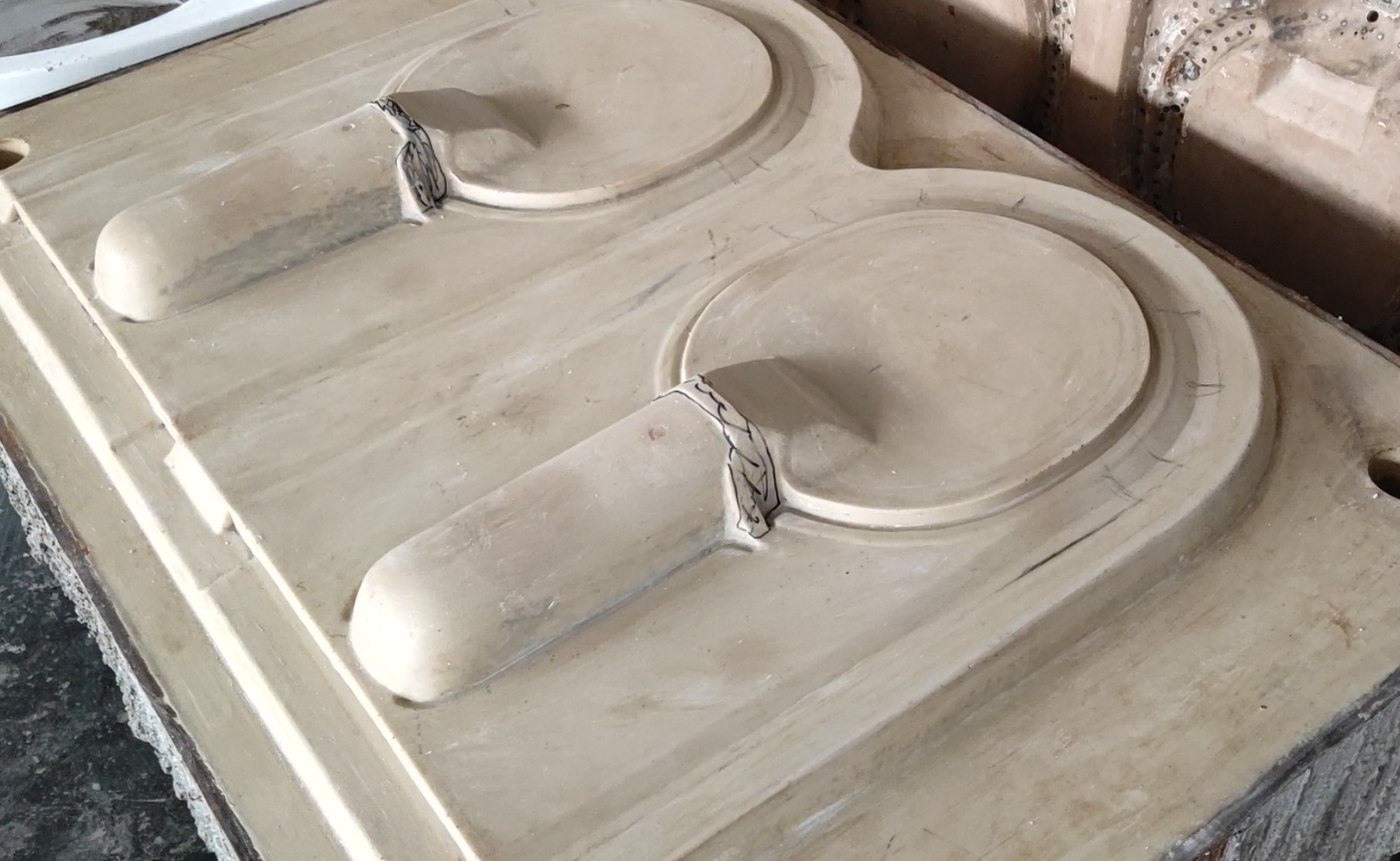 |
Material, structure, pressure, cleaning and maintenance must work together. Increasing pressure or extending service without validation may exchange short-term output for faster performance loss.
Pressure-mould repeatability also depends on stable slip. A mould cannot compensate for uncontrolled viscosity, thixotropy, temperature or solids-related variation. Mould and slip trends must be reviewed together.
Select a limited set of critical dimensions and one measurement method, then assign unique IDs to masters, pressure moulds and products. Before release, verify the first piece and consecutive cycles. During production, inspect according to risk and preserve the mould, slip and recipe relationships behind every result.
After repair, requalification is required before production resumes. Uncontrolled touch-up without a revision creates a new geometry with no reliable history.
Mould life and accuracy must be managed together. Chasing lifetime alone can keep an inaccurate mould in production, while judging one good piece ignores cycle stability. Acceptance should cover geometry, forming capability and sustainable operating condition.
The industrial master defines the geometric starting point, the pressure mould reproduces it through cycles, and traceability reveals when the chain begins to drift. Connecting master revisions, mould cycles, slip condition and product dimensions is the practical route to longer useful life, better accuracy and stable sanitary ware production.