

Introduction
Rapid mold changeover technology has emerged as a critical methodology in modern manufacturing, driven by the dual pressures of efficiency and cost control. This approach focuses on streamlining the mold replacement process to significantly reduce non-productive time, thereby enhancing overall equipment utilization and production throughput. In today's market environment—characterized by diverse customer orders and shortened delivery cycles—the ability to swiftly adapt production lines has become a key indicator of competitiveness.
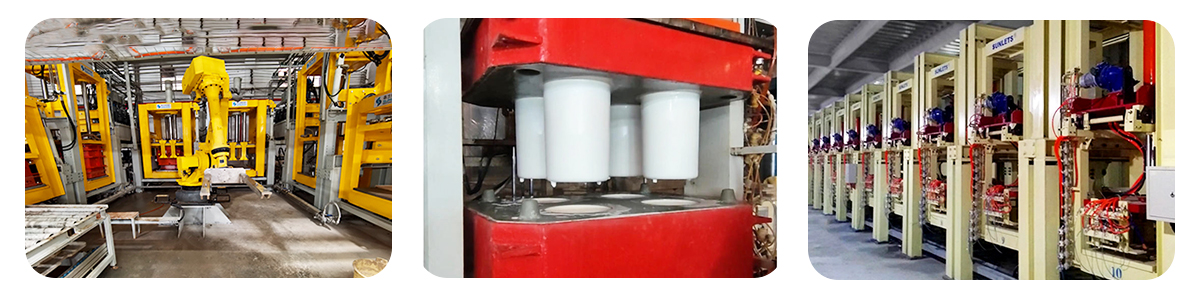
Quick mold change technology plays a pivotal role in boosting production efficiency, with the following primary functions:
1. Shortening production cycles and boosting efficiency
By optimizing the demolding process, rapid demolding technology significantly reduces the time required for demolding. This minimizes equipment downtime waiting for demolding, enabling faster transition into the next production cycle. For instance, automatic sprue-cutting demolding technology automatically severs the sprue and demolds via mold structure, reducing single-cycle production time by 10%-15%—particularly vital for high-volume manufacturing.
2. Reducing Labor and Production Costs
Traditional demolding often requires manual assistance or tools, increasing the risk of product damage or deformation. Rapid demolding technologies (such as automated demolding) achieve demolding through mechanical or automated means, minimizing human intervention. This reduces operational risks and the likelihood of product damage while saving labor and production costs, thereby enhancing a company's market competitiveness.
3. Enhancing Product Quality and Consistency
Rapid demolding technologies typically employ standardized processes and automated controls, minimizing human influence on the demolding process. Simplified and standardized workflows not only reduce operational complexity for employees but also improve the consistency of product quality.
4. Increasing Production Flexibility
Rapid demolding technologies enable production lines to switch product models or molds more quickly, adapting to the demands of multi-variety, small-batch production. This capability allows swift responses to market demand shifts, fulfills diverse production requirements, strengthens corporate adaptability, and increases production flexibility.
In summary, rapid demolding technology effectively boosts production efficiency through multiple avenues: shortening demolding time, increasing equipment utilization, reducing labor costs, enhancing product quality, and improving production flexibility. It serves as a crucial technical means for manufacturing to achieve high-efficiency production. In the new era of manufacturing environments, rapid demolding technology will continue to play a vital role, injecting new momentum into the sustainable development of enterprises.